The marriage of music and movement using the Apple device ecosystem
Brand
Ubiquitous Computing
Year
2025
Standard music interfaces are "context-blind."
For neurodivergent adults (ADHD/ASD), manual playlist management during task transitions creates severe cognitive friction. This lack of automated environmental adaptation leads to "sensory mismatch," where the audio environment contradicts the user's physiological arousal, precisely when they need support the most.
The core issue: Music apps don't know if you're sprinting to catch a bus or pacing in your living room.
This forces users to manually adjust their music, breaking the very flow state they're trying to achieve.
Scope of Work
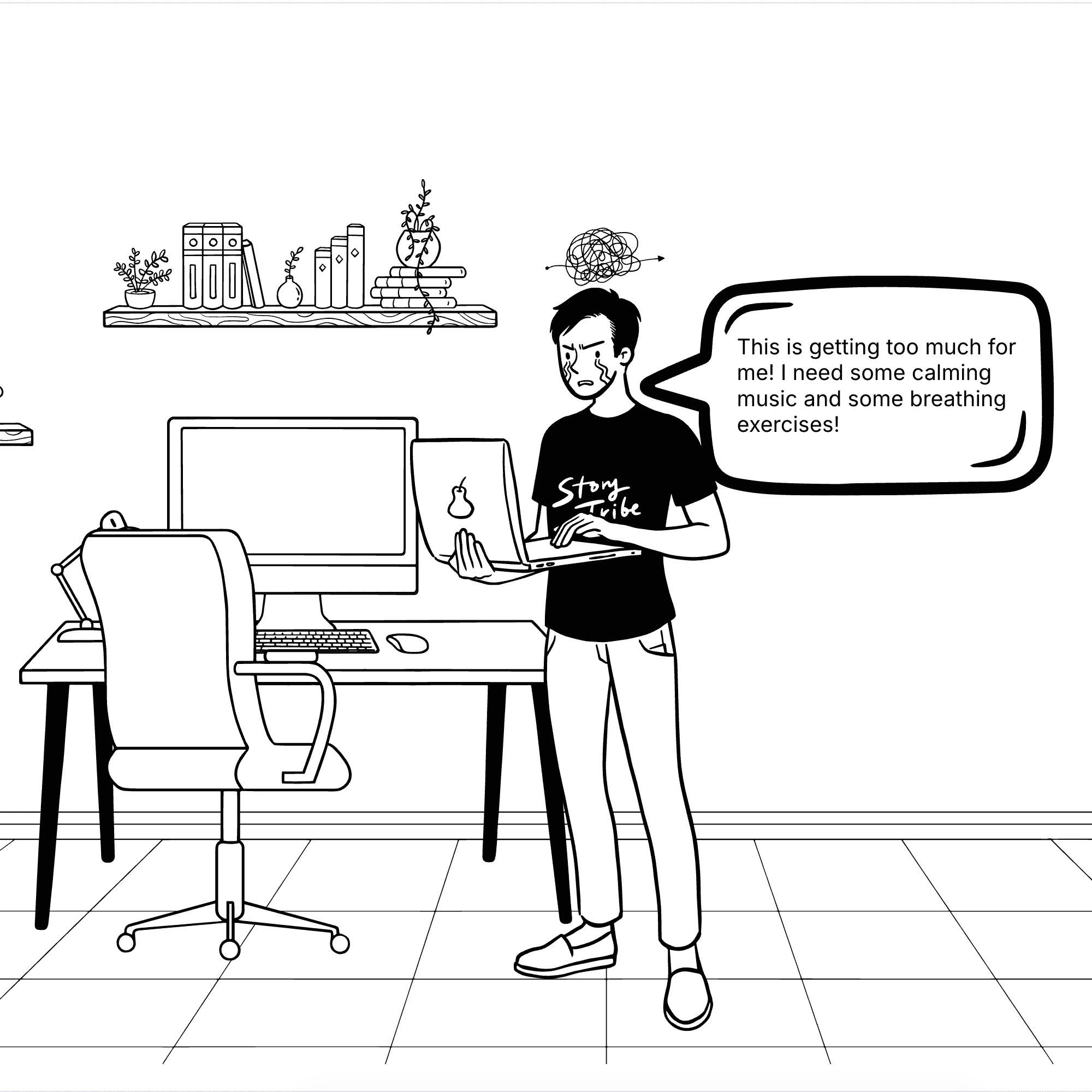
The "Seam" in the Experience
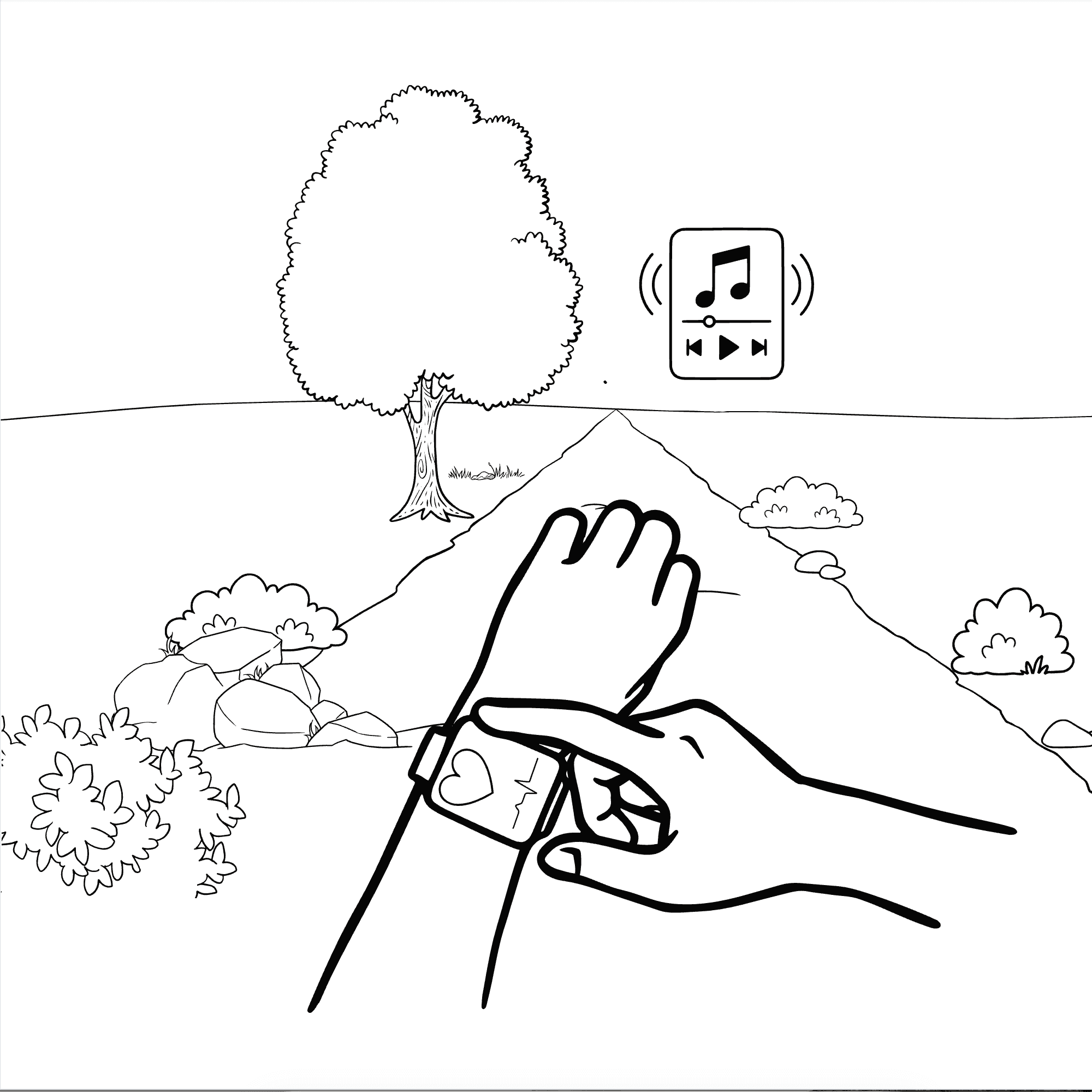
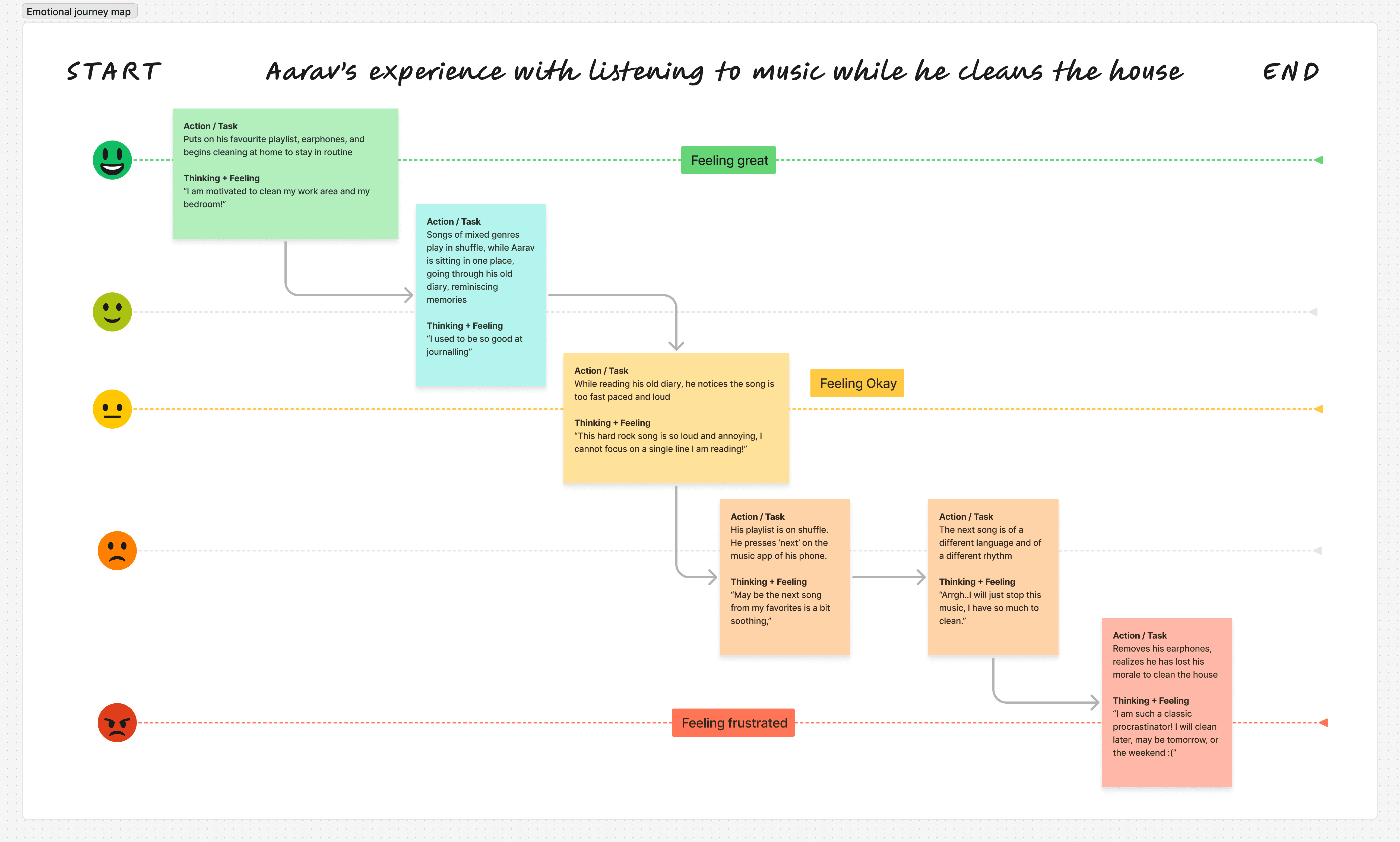
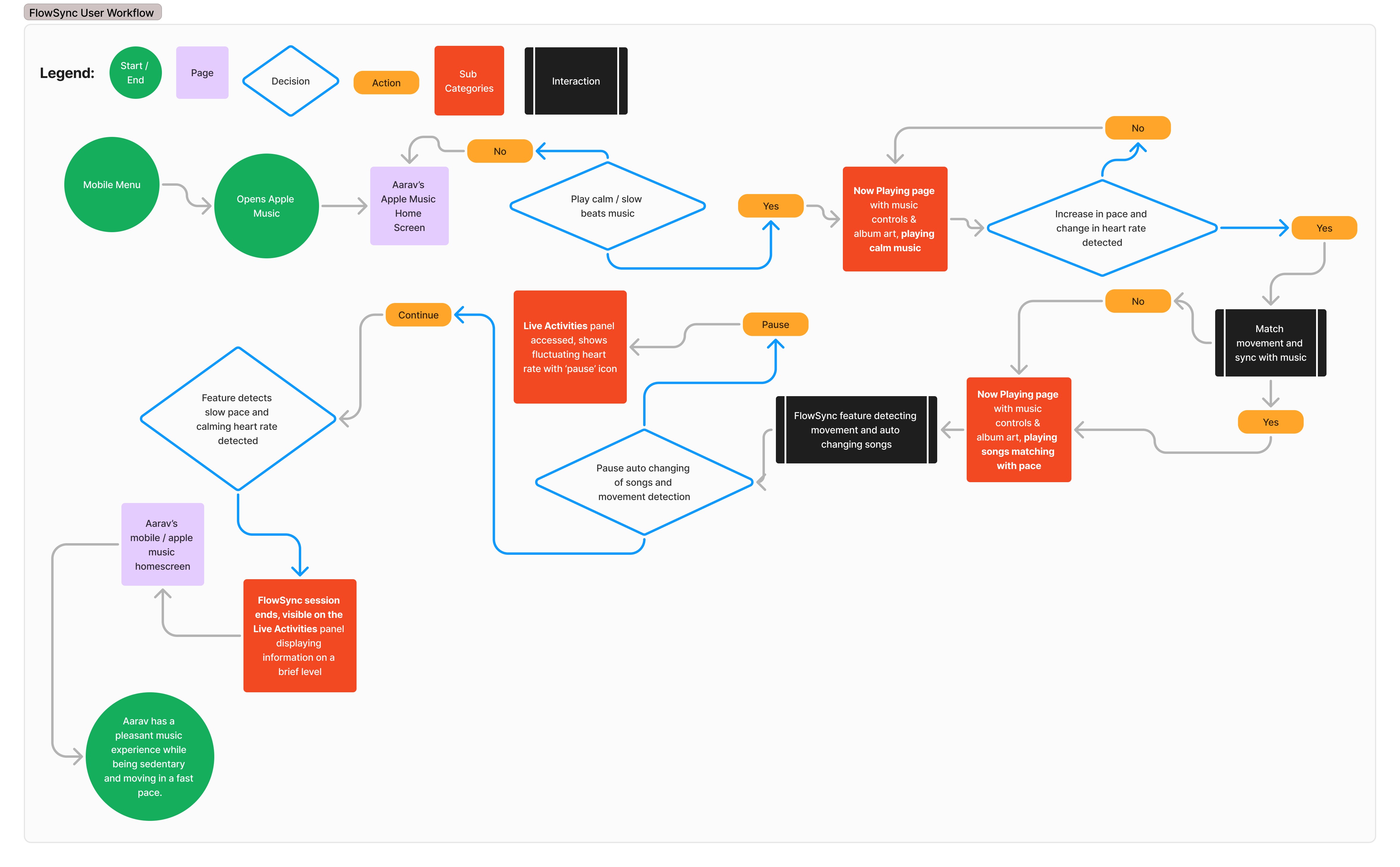
When Aarav is in the zone, he’s productive. But the moment his physical activity shifts…moving from deep-work sitting to high-energy cleaning, his static playlist breaks.
He has to stop, pull out his phone, and manually search for a new song that matches his pace. This "seam" in his environment shatters his focus.
FlowSync - The Invisible Partner
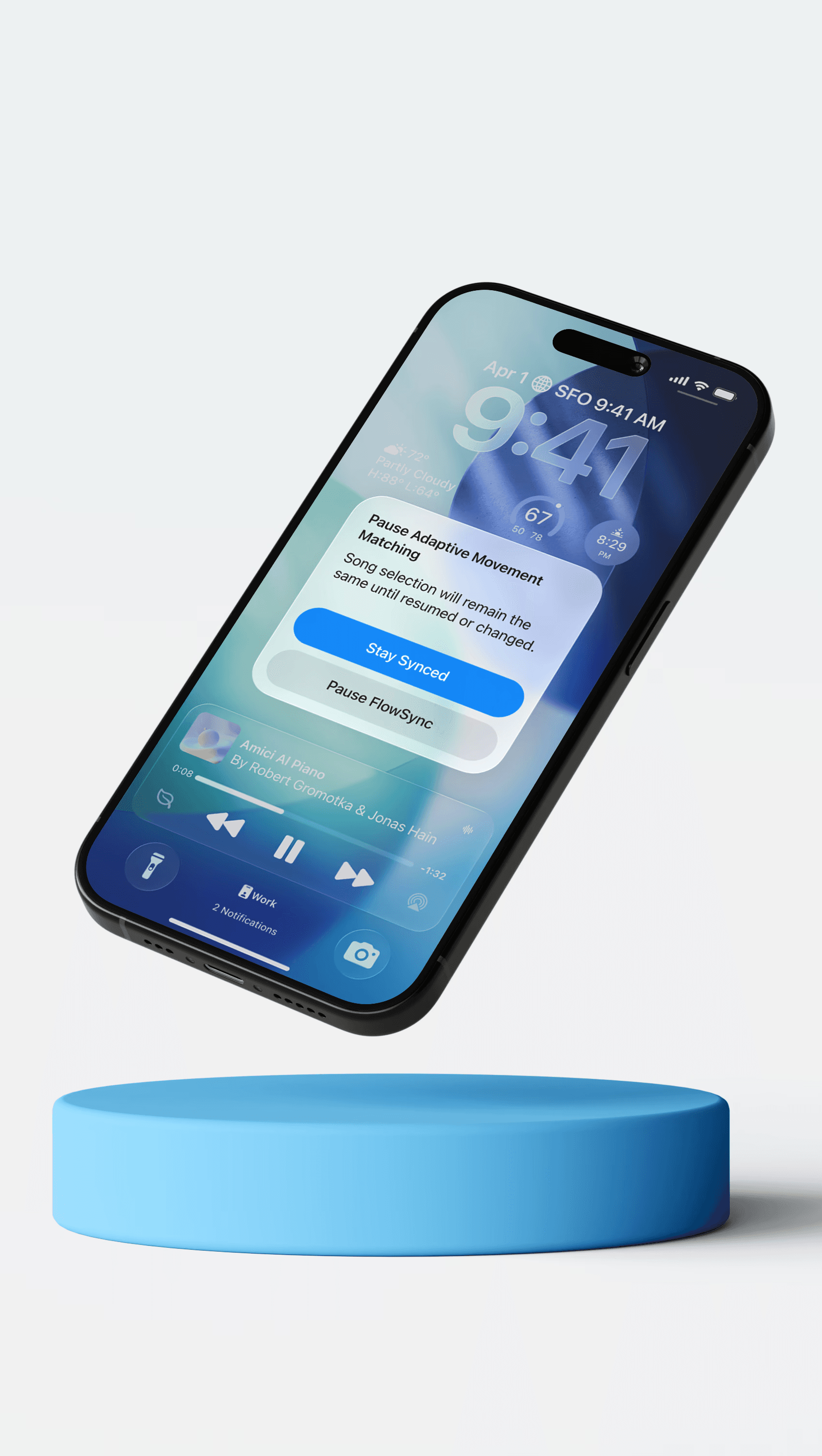
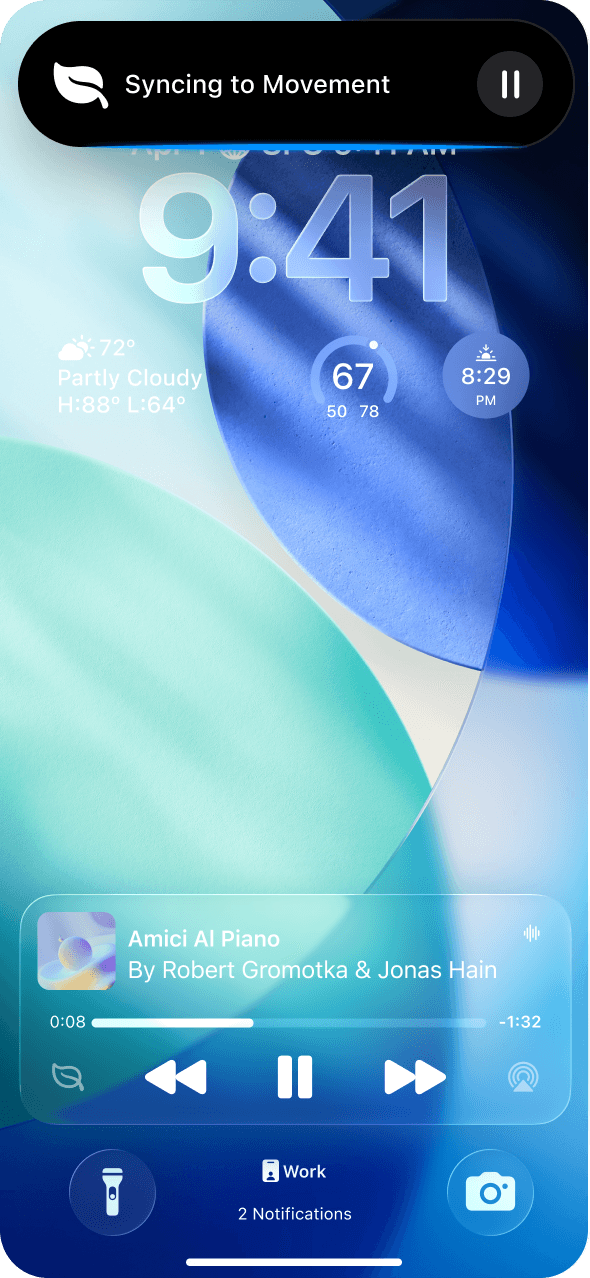
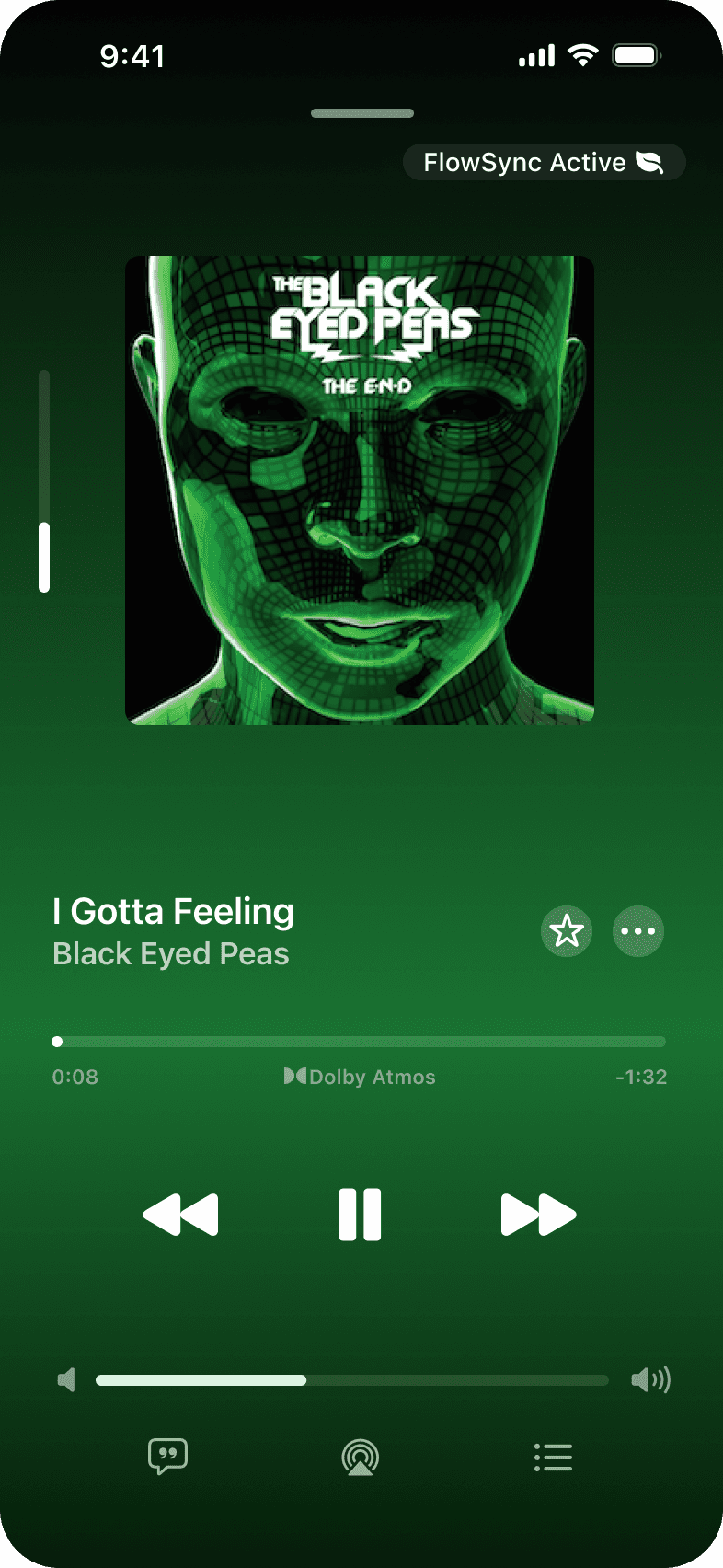
I designed FlowSync, a feature integrated directly into the Apple ecosystem.
FlowSync uses the sensors Aarav already carries, his iPhone and Apple Watch, to act as an intelligent, invisible partner.
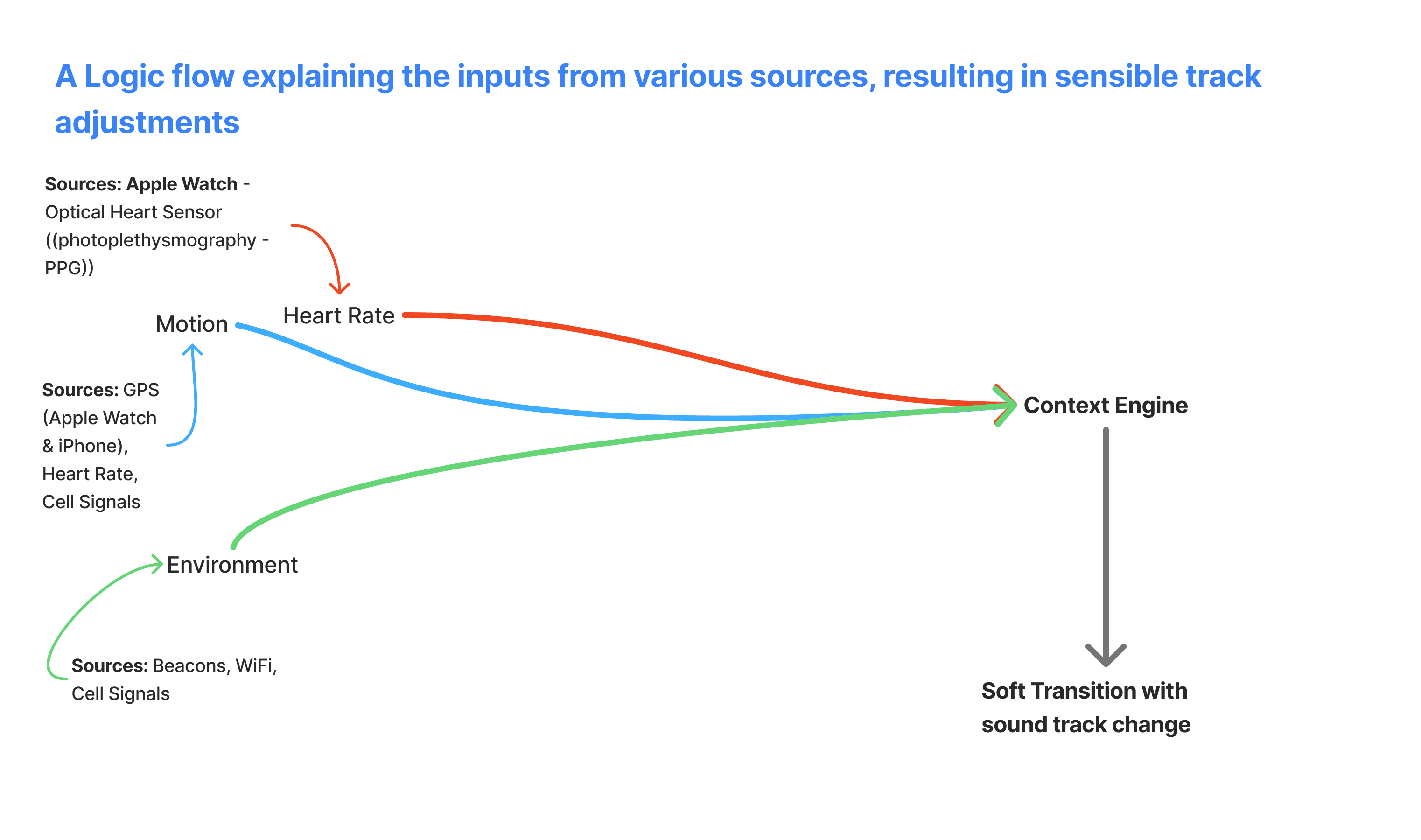
It detects his movement (via accelerometer) and heart rate (via Apple Watch) to automatically switch songs to match his physiological pace.
No manual management.
No cognitive load.
Just flow.
Privacy by Design
The biggest challenge? How to use sensitive physiological data without compromising privacy.
FlowSync adheres to Contextual Integrity.
By leveraging on-device intelligence (Edge Computing), all processing happens locally on Aarav's hardware. Nothing is uploaded to the cloud. His movement patterns and heart rate data stay strictly between his devices.
Resilience Through Fallbacks
Technology is messy. GPS signals die, and Wi-Fi can be erratic. FlowSync is built for the real world, utilizing Graceful Degradation through a layered sensor approach:
Primary: Continuous Heart Rate & Accelerometer (The core "Sync").
Indoor/Outdoor Context: GPS (Outdoor) + Wi-Fi Triangulation (Indoor).
The "Safety Net": When GPS or Wi-Fi fails, the system reverts to basic step-count logic.
Battery Saver: If power is low, the system disables high-energy scans and defaults to simple tempo-matching.
The "Soft Landing" Iteration
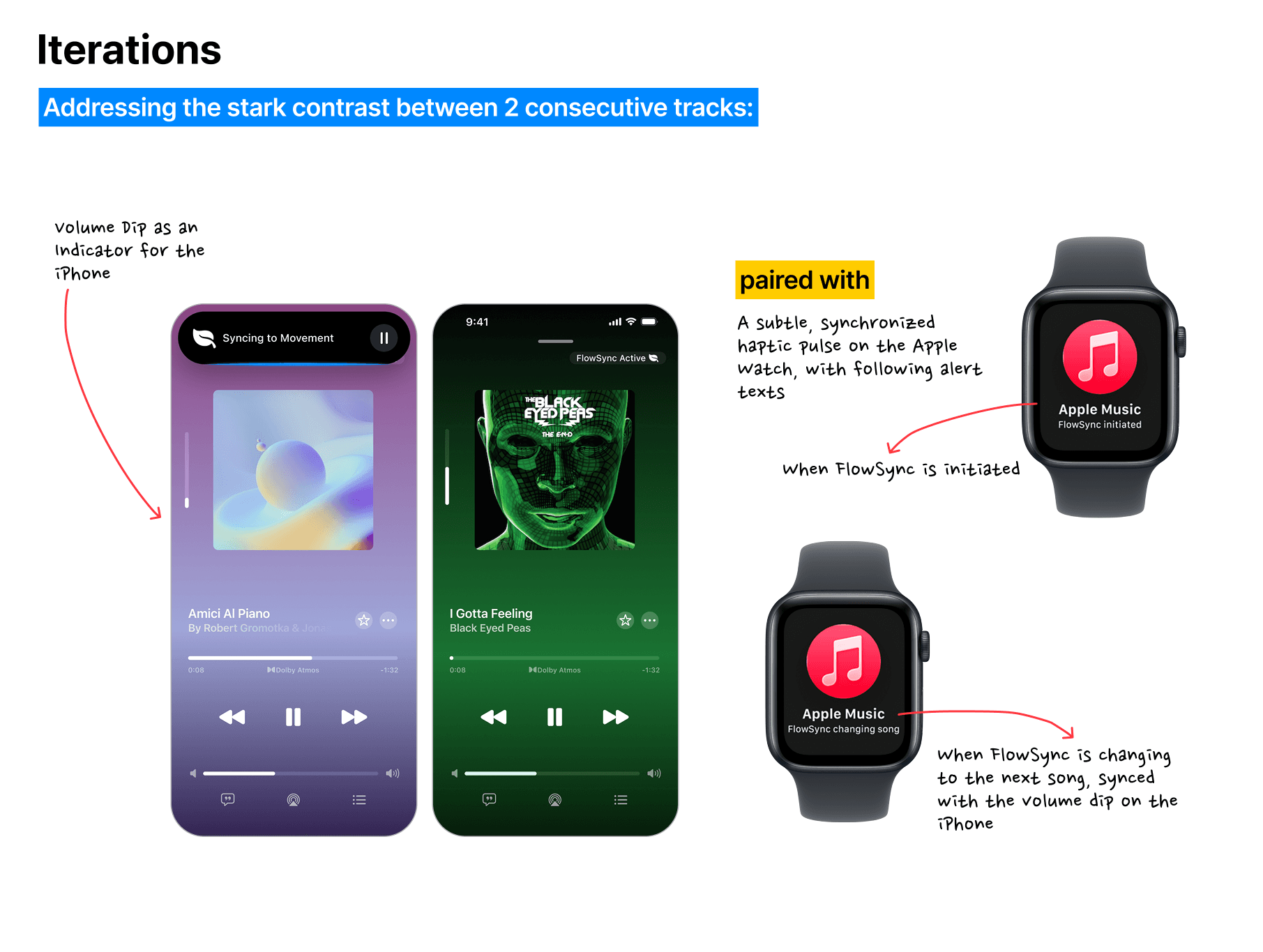
In testing, I discovered that abrupt song changes caused "sensory shock." I iterated the design to include:
Volume Damping: The music gently lowers as the next track fades in.
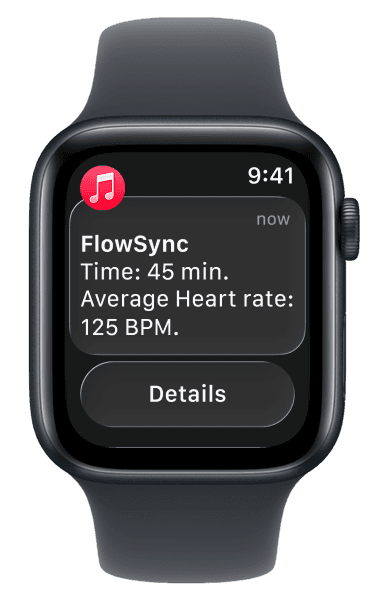
Tactile Anchors: A subtle, synchronized haptic pulse on the Apple Watch confirms the tempo lock, grounding Aarav’s experience without requiring him to look at a screen.
Why this matters
FlowSync isn't just about music; it’s about Calm Computing.
It treats the body as an interface, respecting the user's need for stability. By building on top of the Apple ecosystem, I delivered a powerful, accessible tool that feels like it was always meant to be there.